How to choose menopause supplements on Amazon: labels, doses, and safety checks
How to choose menopause supplements on Amazon: labels, doses, and safety checks: Quick Answer: For how choose menopause supplements on Amazon: labels…
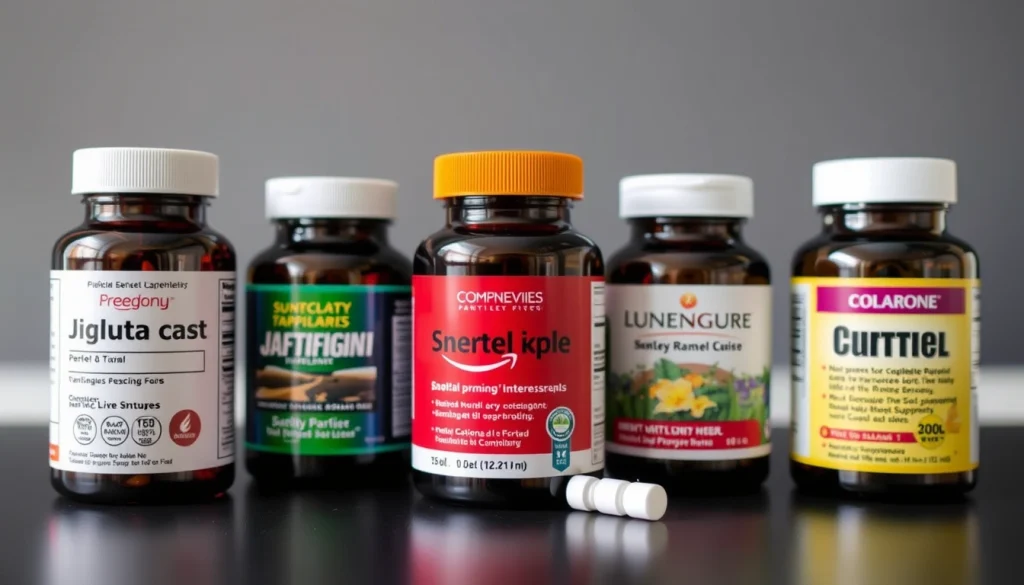
How to choose menopause supplements on Amazon: labels, doses, and safety checks
Last updated: August 11, 2026
- A 2-capsule serving can also turn a $19 bottle into a much higher monthly cost — sticker shock in slow motion.
- A $28 bottle with a clear label can be a better value than a $16 bottle with hidden amounts.
- That’s the practical side of how choose menopause supplements on Amazon: labels, doses, safety checks .
- Quick check: should the label not clearly show each ingredient and its amount, I would skip it.
Quick Answer: For how choose menopause supplements on Amazon: labels, doses, safety checks, the safest short answer is usually to begin with one symptom, one product, and one safety check before you buy. A clear label, a transparent dose, and a fit with your medicines and history put you in a far better spot than reviews alone ever will. Severe, new, or disruptive symptoms? Talk with a qualified clinician first.
Key Facts
– Menopause supplements on Amazon should be judged by the Supplement Facts panel, not the front label.
– The biggest risks are vague blends, hidden overlaps, and unsupported menopause claims.
– If you cannot see each ingredient and its amount, skip the product.
– Ingredients with some research still vary a lot in form, dose, and safety.
– If you take prescription medicine or have liver disease, cancer history, thyroid disease, or heavy bleeding, check with a clinician or pharmacist first.
Shopping for menopause supplements on Amazon really comes down to one blunt question: which bottle is least likely to waste your money or clash with your health situation? Not which one looks prettiest. Honestly, that’s the trap. Should your symptoms be severe, new, or disruptive, speak with a qualified clinician about your own situation first. Supplements may sit inside a plan, but they do not replace medical care. That’s the practical side of how choose menopause supplements on Amazon: labels, doses, safety checks.
What Actually Determines the Right Answer Here
Your symptom, your medicines, and the label. That’s the whole game.
For shoppers trying to sort through Amazon listings without getting sold a shiny story, the front label matters far less than the ingredient panel. And should you already take prescription medicines, have liver disease, breast cancer history, thyroid disease, or heavy bleeding, the safety screen matters even more than the supplement category itself. The NIH Office of Dietary Supplements and NCCIH both stress that supplement safety depends on ingredients, dose, and individual risk.
A cleaner way to narrow things down is to work backward from three questions:
- What symptom are you trying to address? Hot flashes, sleep disruption, mood changes, vaginal dryness, and aches are not all the same problem.
- What ingredients are actually inside? Menopause blends often combine herbs, soy isoflavones, black cohosh, magnesium, vitamins, and “proprietary” extras.
- What could interact with your medications or conditions? That is where many Amazon purchases go wrong.
A generic article will usually tell you to “look for quality” and stop there. Not enough. On Amazon, the biggest risks are vague blends, hidden overlap with other supplements, and labels that make unsupported menopause claims. Research and major clinical organizations generally show that evidence varies a lot by ingredient, which is exactly why the label has to be read like a receipt, not a promise. One review of menopause supplement studies found mixed results across ingredients; a mixed bag, plain and simple.
Here’s the decision grid I’d use as a practical guide:
| Situation | Best Path | Why Other Options Fail |
|---|---|---|
| You want help with one symptom only | Pick a single-ingredient product or a very short formula | Multi-ingredient blends make it hard to know what helped or caused side effects |
| You take prescription medicine | Check interactions first, then compare ingredients with a clinician or pharmacist | “Natural” does not mean interaction-free |
| You have hormone-sensitive cancer history | Treat supplement shopping as a medical question, not a shopping question | Some ingredients may be inappropriate depending on your history |
| You want the safest Amazon option | Choose clear labeling, third-party testing, and conservative claims | “Proprietary blend” and miracle language are red flags |
Quick check: if the symptom you want to address is not clear, pause before buying anything.
How I Read an Amazon Supplement Label Without Falling for Marketing

When the Amazon title says “menopause support,” I ignore the title first and read the Supplement Facts panel. Should the listing hide that panel in images or bury key details in the description, I treat it as a warning sign and, if needed, consult a clinician or pharmacist before buying; FDA and NIH guidance both emphasize reading supplement labels carefully.
Here is the label sequence I would follow:
- Find the Supplement Facts panel. Look for the actual ingredient list, not just the product headline.
- Check whether the formula is single-ingredient or blended. Shorter formulas are easier to evaluate than “all-in-one” mixes.
- Look for a proprietary blend. If the label hides individual amounts, you cannot judge whether a dose is meaningful or tiny.
- Read the form of each ingredient. For example, “magnesium” can appear in different forms; “soy extract” and “soy isoflavones” are not the same thing.
- Scan for allergens and excipients. Gelatin, soy, gluten, dyes, and herbal fillers matter if you react to them.
- Check the warning panel. Pregnancy, nursing, liver concerns, medication cautions, and surgery warnings deserve attention.
- Look for the manufacturer name and contact details. A real company should be easy to identify.
- Compare the serving size to the directions. Some labels encourage multiple capsules per serving, which changes cost and tolerance.
The trap is assuming a longer ingredient list means better support. Usually, it means less transparency. Should the product use a proprietary blend, you cannot tell whether the studied ingredient dose is present in any useful amount. And if the label includes vitamins you already take elsewhere, overlap can creep in fast. A 2-capsule serving can also turn a $19 bottle into a much higher monthly cost — sticker shock in slow motion.
For menopause products, I would be extra cautious with grand claims like “balances hormones” or “eliminates hot flashes.” Clinical evidence for supplements in this area is mixed and ingredient-specific, so a label that promises too much usually deserves the least trust. NCCIH notes that evidence for many menopausal supplement ingredients remains limited or inconsistent.
Quick check: should the label not clearly show each ingredient and its amount, I would skip it.
The Doses That Matter—and the Ones That Usually Mislead
The dose question is where many Amazon listings fall apart, especially when the product contains ingredients with some research behind them. Should the product rely on a “menopause blend” without exact amounts, there is no real dose comparison to make. The bottle may be impossible to judge against the studies it implies. That math stops working fast.
I am not going to give you a personal dosage plan, because that belongs with your clinician and your health history. What I can say is this: for any ingredient with published research, the relevant question is whether the product matches the form and amount used in studies or in professional guidance. Should it not, the bottle may be more marketing than evidence. NIH ODS fact sheets are useful here because they give concrete intake ranges for common nutrients.
Examples of what I look for:
- Black cohosh: The evidence is mixed, and product quality varies. The form and amount matter, and liver-related cautions are discussed in reputable clinical resources.
- Soy isoflavones: These are not the same as plain soy protein. A label should say what it is, not just “soy.”
- Magnesium: The form matters for tolerance. Some forms are gentler than others, but the bottle should still be clear about the amount.
- Vitamin B6, vitamin D, calcium: These are common add-ons, but more is not automatically better. Overlap with multivitamins is a common mistake.
- Herbal mixes with maca, dong quai, red clover, or evening primrose: Some women use them, but evidence and interaction concerns vary. Should a label combine several of them, it becomes harder to know what is doing anything at all.
The honest trade-off is that a higher-priced product is not automatically better, but the cheapest one is often cheapest because the label is vague or the formula is underdosed. I would rather buy a simpler product with a transparent label than a crowded “menopause complex” with lots of claims and little clarity. A $28 bottle with a clear label can be a better value than a $16 bottle with hidden amounts.
For a source to anchor your thinking, the NIH Office of Dietary Supplements and the National Center for Complementary and Integrative Health both publish plain-language material on supplement ingredients and safety. I would also look at the North American Menopause Society’s patient resources for a clinician-facing view of symptom management.
Quick check: if you cannot tell what amount of the active ingredient you are actually getting, the product is not worth comparing on price alone.
Safety Checks Before You Click Buy

If you take any medication, have a chronic condition, or are planning surgery, the safety screen matters more than the rating count. But even if you are generally healthy and only trying to reduce nighttime symptoms, you still need this check because interactions can be quiet, not dramatic.
Here is the safety order I would use:
- List everything you already take. That includes prescriptions, over-the-counter medicine, and other supplements.
- Check for interaction-sensitive ingredients. Herbs and hormone-like compounds deserve extra caution.
- Review the warning labels on the listing and the bottle. Amazon photos can omit details, so compare every image.
- Search the manufacturer name. Look for a real company with a real address and customer service path.
- Look for third-party testing language. NSF, USP, and ConsumerLab are names people often use as quality references, though not every good product has them and not every label claim is equally meaningful.
- Read the return policy. If a product makes you uneasy, you want an exit.
- Do a “too good to be true” scan. Claims to “restore youth,” “rebalance hormones fast,” or “replace HRT naturally” are red flags.
The biggest safety mistake I see is treating supplements as harmless because they are sold over the counter. That is not how the body works. Herbal and nutrient ingredients can still cause side effects, and some can be a problem with blood thinners, blood pressure medicine, diabetes medicine, thyroid medicine, antidepressants, or hormone-related treatment plans. If your situation is medically complex, talk with a pharmacist or clinician before buying. The FDA and NCCIH both advise caution because “dietary supplement” does not mean risk-free.
For trustworthy background, I would point readers to the NIH Office of Dietary Supplements and the FDA’s dietary supplement pages. Those are the kinds of sources that explain why supplement labeling and regulation are not the same as prescription drug approval. The FDA also explains that supplements do not go through the same premarket review as drugs.
Quick check: if your medicine list is longer than the ingredient list on the bottle, stop and review the interaction risk first.
The 3 Conditions That Change Everything
If one of these applies to you, the usual “look for a good review and buy it” advice is the wrong advice.
1) You have a history of hormone-sensitive cancer or are in active treatment
If that is true, supplement choice becomes a clinical decision, not a shopping decision. Some ingredients may be inappropriate depending on your situation, and even “natural” products may affect treatment decisions or symptom management. The safer move is to bring the exact product label to your oncology team or pharmacist before buying.
2) You have liver disease or unexplained liver issues
If that is true, be cautious with herbal menopause products, especially those with multiple botanicals. Some herbs have been associated with liver concerns in clinical safety discussions. That does not mean every bottle is dangerous, but it does mean you should not treat a broad menopause blend as routine.
3) You already use hormone therapy, sleep medicine, antidepressants, or blood thinners
If that is true, then the overlap problem matters. A supplement that seems mild on its own can still complicate sedation, bleeding risk, mood treatment, or hormone-related management. The right question is not “Is this natural?” The right question is “Does this fit with what I already take?”
A generic supplement roundup usually skips these differences because they make recommendations messy. But they are exactly what changes the answer. If any of these conditions apply, I would narrow the field to products with the clearest label and then check them with a qualified professional. For these cases, the safest choice is usually not the most popular Amazon listing.
Quick check: should you have a significant medical history, do not shop from Amazon first and sort it out later.
When the Standard Advice Is Wrong
Should your symptoms be mild and you want a low-stakes trial, then a simple, clearly labeled product may be reasonable to discuss with a clinician. But if you are using supplements to avoid getting evaluated for new symptoms, the standard advice flips.
Here are the edge cases where I would change course:
-
Situation: Symptoms are new, severe, or getting worse.
What changes: supplements are no longer the first question.
What to do instead: get evaluated so something more serious is not being missed. -
Situation: You are buying for “hormone balance” but do not know what symptom you want to change.
What changes: the goal is too vague to guide a purchase.
What to do instead: pick one symptom to discuss, such as sleep or hot flashes, and ignore broad blends. -
Situation: The Amazon listing has many reviews but almost no label detail.
What changes: social proof is doing the work of evidence.
What to do instead: choose a product with visible Supplement Facts, a clear manufacturer, and fewer claims. -
Situation: The product combines herbs, vitamins, and minerals in one capsule.
What changes: you cannot tell which ingredient caused benefit or side effect.
What to do instead: prefer simpler formulas unless a clinician has a reason for a combined approach. -
Situation: You already take a multivitamin or mineral supplement.
What changes: overlap becomes a real issue.
What to do instead: total up the ingredients across all bottles before buying another one.
This section matters because Amazon rewards volume and visibility, not necessarily clarity. A supplement can be popular and still be a poor fit for your body. When visibility rises without better labeling, the safest move is still to slow down.
Quick check: should the product solve a marketing problem more clearly than it solves your symptom, pass on it.
A Practical Amazon Buying Path I Would Use
Should I be helping someone shop, I would use this exact sequence. But if any step raises a red flag, I would stop there rather than force a purchase.
- Write down the single symptom you want to address.
- Check whether your medications or conditions make supplements a bad idea without professional input.
- Search for products with a visible Supplement Facts panel and no proprietary blend.
- Compare the ingredient form and amount with credible references from NIH ODS, NCCIH, or a clinician-facing menopause resource.
- Review warnings, allergens, and interaction notes before reading reviews.
- Skip products that promise cures, quick hormone resets, or dramatic results.
- Check whether the company is identifiable and whether the return policy is reasonable.
- Only then compare price per serving, not bottle price alone.
That last step matters because a low bottle price can hide a short supply or a two-capsule serving. A pricier bottle can still be the better buy if it has a clearer label, a smaller serving count, and a lower monthly cost. On Amazon, price alone rarely tells the full story.
In practice, this is what how choose menopause supplements on Amazon: labels, doses, safety checks looks like when you turn it into a shopping routine. It keeps you focused on symptom, ingredient, and safety before marketing.
Quick check: if you reach the price step before you know the dose, go back and reread the label.