How to Adjust Portion Sizes in Menopause Without Counting Calories
For how to adjust portion sizes during menopause without counting calories , use a no-calorie-counting portion control method built around your hand, your…
Mostly empty plate with fork and tiny garnish
Last updated: October 22, 2026
In short: for how to adjust portion sizes during menopause without counting calories, use a no-calorie-counting portion control method built around your hand, your plate, and your hunger cues, then trim the parts that are easiest to overshoot, especially starches and snack portions. The point is not to eat tiny meals; it is to make your usual meals fit the appetite shifts that often show up in menopause without turning every bite into math.
A good portion framework during menopause gives you structure on the days your hunger feels unpredictable. It also keeps protein foods visible on the plate, puts starchy vegetables and whole grains in a measured role, and leaves room for food you enjoy. For more on the wider eating pattern, see the hub on menopause meal patterns and appetite control, and if appetite changes feel extreme or are linked to medication, sleep loss, or other health issues, consult a clinician or registered dietitian. A 2023 Endocrine Society scientific statement notes that menopause-related changes can affect body weight and appetite regulation. If you want the bigger picture on appetite, the hub on menopause meal patterns and appetite control can sit alongside this guide without replacing it.
Start with the portion control method that does not require calorie counting
The simplest method is to build each meal from your hand and your plate, not from an app. You need one plate, one hand, and a rough plan for the meal before you serve it.
- Put the main meal on a 9-inch plate, not a large dinner plate. A smaller plate makes normal portions look complete without requiring you to underfill it. When it works, the food sits in one layer instead of spreading out into a thin landscape.
- Use your palm for protein foods. Aim for one palm-sized portion of chicken, fish, tofu, eggs, Greek yogurt, cottage cheese, beans, or tempeh at a meal. That gives you a built-in anchor. You should see the protein taking up a clear quarter of the plate.
- Use your fist for starchy vegetables or whole grains. Think potato, sweet potato, corn, peas, rice, oats, pasta, quinoa, or bread. One fist-sized portion usually looks like the “carb side” of the meal rather than the center of it.
- Fill the rest with non-starchy vegetables. Broccoli, salad greens, peppers, zucchini, green beans, mushrooms, and similar vegetables should cover about half the plate. When the step works, the plate looks full before you add extra starch.
- Add fat with a thumb-sized amount. Oil, butter, cheese, nuts, seeds, avocado, and dressings add up fast. One thumb of a dense fat or about one tablespoon of spread is usually enough to start.
- Pause before seconds. Wait 10 minutes after finishing the first plate. If you are still physically hungry, add more protein or vegetables first. If the meal was balanced, the urge for more usually softens instead of escalating.
This method is useful because it is repeatable at home, in a dining hall, or at a restaurant. It is not perfect, and that is the point. You are not trying to measure every gram; you are trying to stop the meals that quietly grew larger over time.
For a practical visual guide, the USDA MyPlate model and NIH-style hand-portion tools both support this approach. If you want a simple way to picture the plate, the portion reset works best when the meal is built before serving, not after.
How do I know if my portions are too big during menopause?
Your portions are probably too big if you finish meals feeling stuffed, keep eating past comfortable fullness, or need a long recovery after dinner. That is often the clearest clue.
Use hunger and fullness as the second part of the method, not the only part. A practical scale is 1 to 10: start eating around a 3 or 4, and stop around a 6 or 7. You do not need a perfect number. You need a repeatable check that says, “I could eat more, but I do not need to.”
Look for these signs that portions need adjusting:
- You are not hungry again for 5 hours, yet you still feel uncomfortably full.
- The plate disappears fast, but the meal does not keep you satisfied.
- Evening grazing starts because lunch was light on protein or fiber.
- You routinely add “just a little more” of starch, cheese, oil, or dessert.
- Your meals are built around one food group, such as pasta, bread, or cereal, with little else.
Now the honest trade-off: hunger cues can get noisy in menopause. Poor sleep, stress, hot flashes, alcohol, and skipped meals can all blur the signal. That means the answer is not to distrust your body. The answer is to pair your body with a structure. The portion control method gives you the frame; your hunger gives you the finish line.
If a meal leaves you hungry within 1 to 2 hours, do not assume you need a bigger plate. First check whether it had enough protein, enough vegetables, and enough staying power. A meal with 20 or 30 grams of protein will usually behave very differently from a meal built from refined starch alone, even if both look “the same size.”
For more on the appetite side of this, the NIH and NIA both note that sleep, activity, and meal regularity affect hunger and fullness signals. If those signals are persistently confusing, a dietitian can help you adjust portions safely.
Adjust protein portions first, not last
Protein portions are the first thing I would protect, because they help a meal feel anchored without making it huge. If you cut calories by shrinking everything evenly, protein often gets pushed too low and the meal stops working.
A hand portion is the easiest way to do this. For most meals, aim for one palm of protein foods, thick enough to match the thickness of your palm, not the length of your fingers. If you eat a very light breakfast, a palm at lunch and dinner may be enough. If your meals are spaced far apart, you may need a palm plus a little extra from another protein source.
Good choices include:
- Eggs or egg-and-white combinations
- Chicken, turkey, fish, shrimp, lean beef
- Tofu, tempeh, edamame, soy yogurt
- Greek yogurt, cottage cheese
- Beans and lentils, though they also count toward starch for some meals
Protein is also where hidden portions creep in. A handful of nuts is not the same as a palm of lean protein. A yogurt cup with a lot of sugar may not behave like a protein portion at all. A slice of cheese can be useful, but it is easy to stack two or three slices without noticing.
The practical test: after a meal with enough protein, you should feel settled, not sleepy and not hunting the pantry 45 minutes later. If you still want seconds, add more vegetables first, then more protein if needed. That sequence matters because protein changes satiety more reliably than extra bread, crackers, or cereal.
This is not the right method for someone who dislikes higher-protein eating for medical or personal reasons without speaking to a clinician. In that case, structure still helps, but the ratios should be individualized.
What to do with starches and whole grains when appetite changes
Starchy vegetables and whole grains should stay on the plate, but in a measured role. The mistake is not eating them; the mistake is letting them become the meal by default.
Use one fist-sized portion as the starting point for:
- Potatoes and sweet potatoes
- Rice, pasta, couscous, quinoa, oats
- Corn, peas, winter squash
- Bread, tortillas, crackers, cereal
On a plate-method meal, starch should usually occupy about a quarter of the plate, not half. That leaves room for protein and vegetables without making the meal feel sparse. If you are especially hungry, increase vegetables first, then protein, before you double the starch.
This matters in menopause because starch is easy to over-serve when energy dips. A second scoop of rice or a bigger slice of bread can feel small in the kitchen and large on the body. That is why measuring by hand beats “eyeballing” from a serving bowl.
There are two useful exceptions:
- If you exercised hard or walked for a long stretch, a slightly larger starch portion may fit better.
- If breakfast is your biggest meal, you may need more oats, toast, or fruit there and less at dinner.
The trade-off is that starch is not the enemy, but it is the most common portion drift. If you try to cut it too hard, the meal can become bland and unsatisfying. If you leave it unmeasured, it can quietly crowd out the rest of the plate. A fist gives you a middle path.
For readers who need a broader plan for appetite and meal timing, the linked menopause appetite hub is the better place for pattern-level decisions. This page stays focused on portions.
How to scale snack portions without feeling deprived
Snack portions work best when they look like a planned mini-meal, not a second dinner. The simplest rule is to choose one protein or produce item plus one satisfying add-on, then stop there.
A useful snack might be:
- One small container of yogurt with a few berries
- One apple with a measured spoonful of nut butter
- A palm-sized piece of cheese with grapes
- Carrots with hummus
- A boiled egg with fruit
- A small handful of nuts, not the bag
If you keep reaching for more, the problem is usually not willpower. It is that the snack lacked enough protein, fiber, or texture. A cookie alone disappears fast. A yogurt, fruit, and a few nuts usually holds up better because it takes longer to eat and feels more complete.
The common mistake is turning a snack into an untracked meal. A bowl of trail mix, a few crackers, some cheese, then a granola bar can become dinner in disguise. That costs you clarity. You think you had “just snacks,” but the total energy and volume were enough to change your appetite for the rest of the day.
Use a bowl or plate for snacks whenever possible. Eating from the bag makes it too easy to keep going past the portion you meant to eat. If you need an actual number, start with one small bowl or one single-serving package and see whether that holds you until the next meal.
This is one place where the hand method helps more than calorie counting. A thumb of nut butter, a palm of yogurt or cheese, or a fist of fruit gives you enough structure to keep the snack useful without making it feel like a punishment.
If you are trying to lose weight without calorie counting, keep the goal modest and realistic, and check with a professional if you have diabetes, a history of eating disorders, or other medical needs. The CDC and NHS both support steady portion changes as part of a broader healthy eating pattern.
Common portion mistakes that make menopause eating feel off
The biggest mistake is adjusting every food at once. That leaves meals too small, too bland, and too hard to repeat. Instead, change one piece at a time, usually starch first or snack portions first, while keeping protein steady.
Another mistake is using “healthy” foods as a free pass. Nuts, avocado, granola, olive oil, and cheese are useful, but they are dense enough that portion creep matters. Two tablespoons of something spreadable can disappear in a blink. A measured spoon, thumb, or small bowl keeps them in check without banning them.
A third mistake is skipping meals, then trying to control portions later in the day. That often backfires. By evening, hunger is loud, and portions stop looking like portions. If that pattern happens often, a steadier breakfast or lunch may work better than a stricter dinner.
A fourth mistake is using a restaurant plate as the standard at home. Many restaurant plates are 11 to 12 inches or larger, which can make normal food look tiny and encourage over-serving. A 9-inch plate at home gives you a more honest visual.
Because of that, the fix is to create defaults. A default plate, a default palm of protein, a default fist of starch, a default snack bowl. Once those are set, you do not need to negotiate with every meal.
A simple 1-day portion reset you can start tonight
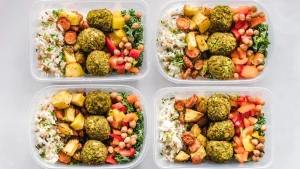
A portion reset works best when it is ordinary enough to repeat tomorrow. Pick one day and build three meals around the same framework rather than trying to be perfect all week.
Start with breakfast:
- 1 palm of protein, such as Greek yogurt, eggs, or cottage cheese
- 1 fist of whole grains or fruit, such as oats or berries
- A small thumb of nuts or seeds if needed
For lunch:
- 1 palm of protein
- 2 fists of non-starchy vegetables
- 1 fist of starchy vegetables or whole grains
- A thumb of dressing, oil, or cheese
For dinner:
- Keep protein the same size as lunch
- Make vegetables the largest part of the plate
- Keep starch to 1 fist unless you are truly more active that day
For one planned snack:
- Use one bowl or plate
- Choose one protein-based item or produce item
- Stop when the portion is gone, not when the package is gone
At the end of the day, ask one question: did the meals feel structured without feeling stingy? If yes, the method is working. If not, the first thing to change is usually the protein portion or the amount of starch, not the vegetables.
This approach is not for someone who wants exact numbers, macros, or a tightly controlled plan. It is for the reader who wants a clear, repeatable way to eat through menopause without counting calories at every meal.
Key Takeaways
- Use a hand-and-plate system instead of calorie counting.
- Keep protein visible at every meal.
- Measure starch with your fist so it does not quietly take over the plate.
- Let vegetables fill space first.
- Make snacks deliberate and small enough to feel like a bridge, not a second meal.
- Adjust portions based on fullness, not perfection.
Can you lose weight without calorie counting?
Yes, many people can change their intake without tracking every calorie, but results depend on the pattern they follow and how consistently they use it. A portion framework can reduce overeating and make meals more predictable. If weight change is the goal, consult a clinician or registered dietitian to help tailor the approach safely, especially if you have diabetes, are pregnant, take medications that affect appetite, or have a history of disordered eating.
What is a simple portion guide for menopause?
A simple guide is one palm of protein, one fist of starch, two fists of vegetables, and one thumb of added fat at a meal. That is a practical starting point, not a rule carved in stone. The plate method works well because it is visual, repeatable, and easy to use without an app. The CDC and USDA both use similar visual plate guidance.
How do I know if I am eating too much?
You may be eating too much if you regularly feel stuffed after meals, keep taking seconds without true hunger, or snack so often that meals no longer matter. The clearest sign is repeated discomfort, not one large meal. If the pattern is persistent, a health professional can help sort out appetite, sleep, stress, and meal structure.
Drafted with AI; not yet reviewed by a person.