How to Balance Carbs and Protein at Breakfast During Menopause
How to balance carbs and protein at breakfast during menopause: A balanced breakfast for menopause usually works best with about 20 to 30 grams of protein…
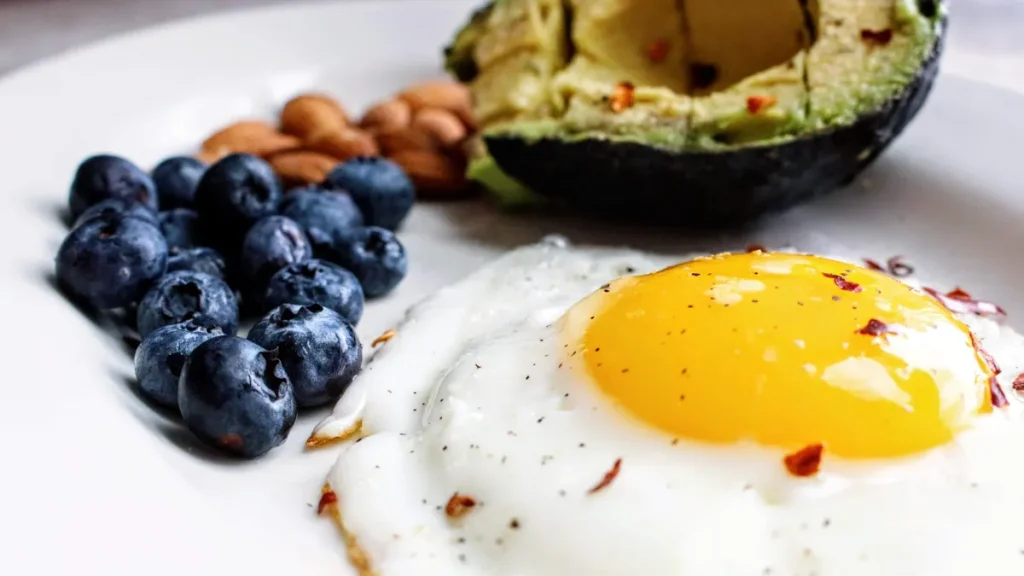
Egg, blueberries, avocado, and almonds on a plate
Last updated: October 22, 2026
Quick Answer
A balanced breakfast for menopause usually works best with about 20 to 30 grams of protein plus one measured carb serving and some fiber. In practical terms, that can be eggs or Greek yogurt with oats or whole-grain toast and berries or chia seeds.
In short: use a balanced breakfast template with a modest carb portion, a solid protein portion, and some fiber so breakfast leaves you satisfied without a big blood-sugar swing. In this article on how to balance carbs and protein at breakfast during menopause, a simple way to start is a plate built around eggs or Greek yogurt, oats or whole-grain toast, and berries or chia seeds.
Menopause can make breakfast feel less forgiving. A pastry and coffee may leave you hungry an hour later. A bowl of plain yogurt may feel too light. The fix is not to cut carbs out of breakfast; it is to give them a protein partner and enough fiber to slow the meal down. For general nutrition guidance, see the Academy of Nutrition and Dietetics and the NHS [1][2].
A balanced breakfast template matters here because the first meal often sets the tone for the next few hours. If breakfast is mostly refined starch, hunger tends to come back fast. If breakfast is all protein and no carbs, some people feel flat, unsatisfied, or oddly tense before lunch. The better target is steadier energy, not perfection.
What the balanced breakfast template does

A balanced breakfast template gives you a repeatable way to build a meal instead of guessing each morning. The template is simple: protein first, carbs second, fiber included, and fat used as a support, not the main event.
The easiest version for menopause breakfast planning is:
- 20 to 30 grams of protein
- 1 serving of carb food, usually 1 slice of whole-grain toast or about 1/2 cup cooked oats
- 1 fiber-rich add-on, such as berries or chia seeds
- 1 optional fat source, such as nuts, seeds, or a little avocado
That combination is not magic. It is practical. Protein and fiber tend to slow digestion, while the carb portion gives you usable energy. Together they usually make breakfast feel more complete than a carb-only meal. The exact ratio can shift by appetite, activity, and whether you eat again in 3 hours or 5.
This template is especially useful if breakfast is your weakest meal. It gives structure without forcing a rigid menu. It also keeps the carb question grounded: carbs are not banned, just portioned and paired.
A good test is this: after breakfast, you should feel comfortably full, not stuffed, and able to wait until midmorning or lunch without thinking about food the whole time. If you are hungry again in 60 minutes, the meal was probably too light on protein, fiber, or total volume.
How do I build the ratio on my plate?
You build the ratio by choosing one clear protein source, then adding one measured carb portion and one fiber-rich side. Start with the protein, because that is the part people usually under-eat at breakfast.
-
Choose a protein anchor first. Put eggs, Greek yogurt, cottage cheese, tofu, or a protein-rich dairy option at the center of the meal. Two eggs plus a side of Greek yogurt works well when you need more staying power than eggs alone. The result should be a breakfast that does not look like a snack.
-
Add one measured carb serving. Use 1 slice of whole-grain toast, 1 small piece of fruit, or about 1/2 cup cooked oats. If the carb portion grows into 2 thick slices of toast, a large bowl of cereal, and juice, the meal starts to tilt away from balance. The result you want is enough energy, not a starch pile.
-
Bring in fiber through fruit, grains, or seeds. Berries and chia seeds are useful here because they add texture and help the meal feel less processed. A bowl of oats with berries and chia seeds is a very different meal from instant oats with brown sugar. The texture should feel thicker and more substantial.
-
Use fat sparingly. A spoon of nut butter, a few nuts, or a little avocado can smooth the meal out. Too much fat can crowd out the protein and carb balance and make breakfast heavy. The result should be calm fullness, not a greasy aftertaste.
-
Check the after-effect, not just the plate. If you are still hungry 90 minutes later, increase protein first, then fiber, before you raise the carb portion. If you feel sluggish, reduce the carb load or swap refined grains for whole-grain toast or oats.
This is the point where many generic breakfast articles go wrong: they only say “eat more protein,” as if the carb part does not matter. It does. Menopause does not require carb removal; it requires better pairing.
What portion sizes usually work best?

The portions that usually work best are small enough to avoid a glucose spike but large enough to stop hunger from boomeranging back. In practice, that means one steady protein portion plus one moderate carb portion, not a large bowl of both.
A workable breakfast might look like this:
- 2 eggs with 1 slice of whole-grain toast and berries
- Greek yogurt topped with chia seeds and a small handful of berries
- Oats cooked with milk or soy milk, then topped with yogurt and seeds
- Eggs on whole-grain toast with sliced tomato or fruit on the side
Those meals are not identical, but they share the same shape. The protein is visible. The carbs are present but measured. Fiber is built in.
If you need a visual rule, think “half the plate non-starchy or fruit, one quarter protein, one quarter carb,” then adjust for breakfast’s smaller size. That plate image is not a medical prescription; it is a useful starting point. Some people need a little more protein than that, especially if breakfast follows early exercise or a long overnight fast.
A common mistake is eating “healthy” breakfast food that is still mostly carb. Granola, flavored yogurt, bagels, muffins, and many breakfast bars can look wholesome while delivering very little protein. The cost is simple: hunger comes back early, and the rest of the day becomes harder to steer.
A better move is to treat oats, whole-grain toast, and fruit as part of the meal, not the whole meal. If you are trying to balance carbs and protein at breakfast during menopause, a registered dietitian or clinician can help tailor portions to your needs and any medical conditions.
Why protein changes how breakfast feels in menopause
Protein changes how breakfast feels because it slows digestion and makes the meal more satisfying. That matters in menopause, when appetite can feel less predictable and energy dips can be more noticeable.
A protein-forward breakfast often helps in three ways:
- It makes the meal last longer in your body.
- It reduces the “I need a snack now” feeling.
- It gives the carb portion a steadier effect instead of a quick rise and fall.
That does not mean protein should crowd out all carbs. Carbs still matter for energy, especially if you walk in the morning, care for others, or have a job that starts early. The issue is balance. A breakfast with eggs and whole-grain toast often works better than either one alone. The same is true for Greek yogurt with oats and berries.
This is also where fiber earns its place. Berries and chia seeds add more than color. They slow the meal and help it feel more substantial without needing another slice of toast. Whole-grain toast does more work than white toast because it usually brings more fiber to the table.
The trade-off is that higher-protein breakfasts can be less convenient. Eggs take time. Greek yogurt can get repetitive. Oats can feel too soft for some people. That is the honest downside: a more useful breakfast is not always the fastest one. If convenience is your main barrier, keep two or three templates on rotation rather than aiming for a new recipe every day.
When should carbs stay in breakfast instead of being cut back?
Carbs should stay in breakfast when you feel better with some starch, fruit, or grain in the morning and when breakfast needs to carry you for several hours. Cutting them back too far can leave the meal feeling sterile and unsatisfying.
Keep carbs in the meal if any of these are true:
- You wake up hungry.
- You exercise before lunch.
- You get shaky or irritable if breakfast is only protein.
- You need something practical you can eat in 10 minutes.
- You do better with oats, toast, or fruit than with eggs alone.
The key is the type and amount of carb. Oats, whole-grain toast, berries, and other minimally processed options are more useful than pastries, sugary cereal, or juice. Those latter foods can make the meal feel fast but not lasting.
There is also a timing issue. If breakfast is very early, you may need a smaller carb portion first and a larger midmorning snack later. If breakfast is late, after a long gap, you may need more total food at the meal itself. Meal timing is part of the balance question, not separate from it.
This guidance is not for someone trying to manage a diagnosed blood-sugar disorder without medical advice; in that case, breakfast planning should be discussed with a clinician or registered dietitian, because carb needs can be more specific. See the American Diabetes Association and the NIDDK for more on individualized carb planning [3][4].
For most menopause readers, though, the answer is not “remove carbs.” It is “choose carb foods that work with protein and fiber instead of against them.”
Common breakfast mistakes that make hunger worse
The most common mistake is building breakfast around refined carbs and calling it balanced. A croissant, toast with jam, sweetened yogurt, or a bowl of cereal may feel like breakfast, but the protein is often too low. The cost is a fast return of hunger and a harder morning. The fix is to add eggs, Greek yogurt, or another protein anchor.
Another mistake is overcorrecting and making breakfast almost all protein. That can leave the meal dry, bland, or too small. Some people then end up grazing later. The fix is to keep one measured carb portion in the meal, usually oats, whole-grain toast, or fruit.
A third mistake is treating fiber as optional. Without fiber, even a decent protein meal can feel less complete. Berries and chia seeds are simple ways to add it without making breakfast complicated. A spoonful of chia seeds in yogurt or oats can change the texture and the staying power of the meal. If you are balancing carbs and protein at breakfast during menopause, fiber is part of the plan, and a dietitian can help if you need a more tailored approach.
A fourth mistake is using breakfast as a place to “save calories” and then paying for it by 10:30 a.m. The breakfast trade looks efficient on paper and chaotic in real life. If breakfast is too small, later meals get harder to manage.
The best correction is boring and effective: keep a few dependable combinations on repeat. Eggs and toast. Greek yogurt, berries, and chia seeds. Oats with protein added. The point is not culinary variety. The point is a breakfast that fits menopause appetite changes and still feels normal enough to repeat.
If broader meal structure still feels confusing, the hub on menopause meal patterns and appetite control can help you connect breakfast with the rest of the day. See also breakfast ideas for menopause and a menopause nutrition guide for related meal planning.
Key Takeaways
- A balanced breakfast template is the simplest way to manage carbs and protein during menopause.
- Keep protein visible, carbs measured, and fiber built in.
- Eggs, oats, Greek yogurt, berries, chia seeds, and whole-grain toast fit this pattern well.
- If breakfast leaves you hungry fast, increase protein first, then fiber, before cutting carbs to zero.
- The goal is not a low-carb breakfast. The goal is a breakfast that lasts.
How much protein should breakfast have in menopause?
A useful breakfast usually has enough protein to make the meal feel complete, not like a snack. In practice, that often means a solid serving from eggs, Greek yogurt, or a similar protein source. The exact target depends on appetite, activity, and the rest of the day, so a dietitian can help if you need precision.
Should menopause breakfast include carbs?
Yes, menopause breakfast can include carbs, and for many people it should. Carbs from oats, whole-grain toast, or berries give breakfast energy and make it easier to stay satisfied. The key is pairing them with protein and fiber so the meal feels steadier and less likely to wear off quickly.
What is a balanced menopause breakfast?
A balanced menopause breakfast is a meal with protein, a moderate carb portion, and fiber. Eggs with whole-grain toast and berries, or Greek yogurt with oats and chia seeds, are good examples. The more useful version leaves you satisfied for several hours without feeling heavy or overly sugary.
[1] Academy of Nutrition and Dietetics: https://www.eatright.org/
[2] NHS healthy breakfast guidance: https://www.nhs.uk/live-well/eat-well/food-guidelines-and-food-labels/eatwell-guide/
[3] American Diabetes Association nutrition resources: https://diabetes.org/food-nutrition
[4] NIDDK diabetes diet and eating resources: https://www.niddk.nih.gov/health-information/diabetes/overview/eating-diet-nutrition
Drafted with AI; not yet reviewed by a person.