How to structure a menopause lunch for steady energy
How to structure a menopause lunch for steady energy and fewer afternoon cravings: a menopause lunch for steady energy and fewer afternoon cravings works…
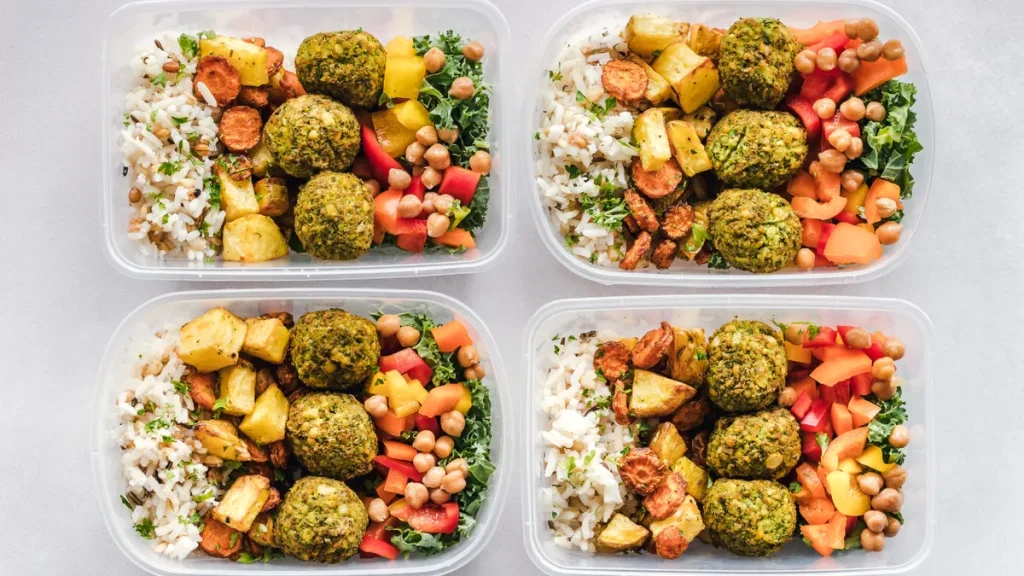
Four meal-prep lunch boxes with grains, vegetables, and protein
Last updated: October 24, 2026
Quick Answer: a menopause lunch for steady energy and fewer afternoon cravings works best when it combines protein, fiber, healthy fat, and a controlled portion of slower-digesting carbohydrate.
In short: a menopause lunch plate for steady energy and fewer afternoon cravings works best when it combines protein, fiber, and healthy fat in one meal, with a controlled portion of slower-digesting carbohydrate, so energy stays steadier and afternoon cravings are less likely to hit.
Key Takeaways
- A menopause lunch plate should start with protein, so the meal does not turn into a quick carb hit.
- Build the plate by adding protein and vegetables first, then beans or quinoa, then olive oil or avocado.
- Meals with protein, fiber, and fat can help curb afternoon cravings by slowing digestion.
- A filling menopause lunch usually sits in the middle: enough to prevent hunger, not so much that it causes sluggishness.
If lunch is the meal that leaves you sleepy, snacky, or hunting for biscuits by 3 p.m., the fix is usually not “eat less” or “be stricter.” The fix is structure. How to structure a menopause lunch for steady energy and fewer afternoon cravings is built to slow digestion enough to smooth blood sugar, but not so heavy that it drags you down for the rest of the workday. That means a clear plate pattern, not a vague “healthy lunch.”
A useful lunch also has to fit real life: desk lunches, supermarket lunch boxes, reheated leftovers, and days when appetite is odd. This guide stays focused on the midday meal only. It supports the larger hub on menopause meal patterns and appetite control, but here the job is simple: build one lunch that leaves you full for 3–4 hours and less likely to chase sugar afterward.
What a menopause lunch plate needs first

A menopause lunch plate needs protein first, because protein is the anchor that keeps the meal from turning into a quick carb hit. The plate also needs fiber from vegetables or beans, a moderate portion of carbohydrate, and a little fat for staying power.
The easiest way to see the structure is to build lunch in this order:
-
Start with a protein base of about 25–30 g if that suits your appetite and health needs.
Use chicken, fish, eggs, tofu, Greek yogurt, cottage cheese, or legumes as the main anchor. A chicken breast, a tin of tuna, or a bowl of beans all work as a starting point. When this step works, the meal feels like a meal within 20 minutes, not a snack with a side dish. -
Add 2 cups of non-starchy vegetables or a big handful of leafy greens.
Think spinach, rocket, mixed leaves, cucumber, peppers, tomatoes, broccoli, or cabbage. This is where the lunch gets volume without a sugar spike. When it works, the plate looks full before the starch goes on. -
Include 1 small cupped hand of slow-digesting carbohydrate.
Quinoa, brown rice, sweet potato, beans, lentils, or a slice of seeded bread are the usual choices. This keeps lunch satisfying without turning it into a carb-heavy meal that can leave energy dipping later. -
Add 1–2 thumb-sized portions of healthy fat.
Olive oil, avocado, olives, seeds, or nuts help with satiety and make the vegetables more worth eating. When this lands well, the meal tastes complete instead of dry or thin. -
Finish with flavor, not extra sugar.
Lemon, vinegar, herbs, mustard, chili, garlic, or yogurt-based dressing can make the plate satisfying without pushing it into dessert territory.
This order matters because the mistake most people make is loading lunch with the starch first: sandwich, crisps, fruit, and a sweet drink. That combination may look light, but it often burns fast and leaves the afternoon cravings to do the rest.
How do I build the plate in the right order?
Build the plate by placing protein and vegetables first, then adding beans or quinoa, then finishing with olive oil or avocado so the meal stays balanced. That order makes portion control easier and keeps the food from drifting into “all starch, no anchor.”
A practical plate template looks like this:
- Half the plate: leafy greens and other non-starchy vegetables
- One quarter: protein such as chicken, eggs, fish, tofu, or beans
- One quarter: quinoa, lentils, brown rice, or a similar slow carb
- A small add-on: olive oil dressing, avocado slices, or a few nuts
For example, a lunch bowl might include grilled chicken, a base of spinach and rocket, roasted peppers, 1/2 cup cooked quinoa, sliced avocado, and olive oil with lemon. That gives you protein, fiber, carbohydrate balance, and fat in one bowl. A bean-based version could use black beans or chickpeas with greens, cucumber, tomatoes, quinoa, and olive oil.
The plate works best when it is specific enough to repeat. A reader who keeps “eat more salad” in mind usually ends up with a bowl of leaves and a side of toast. A reader who uses the plate pattern gets a meal that is easier to repeat five days a week.
If lunch is packed ahead of time, a lidded container with two compartments can help keep wet ingredients separate from leaves. A separate container for dressing is worth it. A soggy salad rarely feels satisfying enough to prevent a 3 p.m. snack run.
Which foods help most with afternoon cravings?

Foods that combine protein, fiber, and fat help most with afternoon cravings because they slow how quickly the meal leaves your stomach. That is the practical reason chicken with beans and greens works better than a plain pasta bowl or a sandwich with no filling.
Use these building blocks often:
- Chicken for lean protein that is easy to portion
- Beans for protein plus fiber in one ingredient
- Quinoa for a slower carbohydrate that still feels like a proper meal
- Leafy greens for volume and micronutrients with very few calories
- Avocado for satiety and texture
- Olive oil for flavor and staying power
A lunch does not need all six every time, but it should usually include at least one from each group. A chicken, quinoa, and greens bowl with olive oil dressing is a strong default. So is a bean and avocado salad with seeds and a side of yogurt. A chickpea and leafy green wrap can work if the wrap itself is not the only substantial part of the meal.
The main trade-off is taste and convenience. Protein-heavy lunches can feel repetitive if every day looks like dry chicken and plain vegetables. Fat helps with satisfaction, but too much olive oil or avocado can make the meal too calorie-dense for some people. Beans are excellent for fullness, yet they can cause bloating in people who are sensitive to fiber or who jump from low-fiber eating to very high-fiber eating too quickly.
That means the better question is not “What is the healthiest lunch?” The better question is, “What lunch do I actually want to finish, and still feel steady after?”
For a deeper frame on meal rhythm, the hub on menopause meal patterns and appetite control fits around this page without repeating the lunch method here.
Portion ideas that keep lunch filling without going heavy
A filling menopause lunch usually lands in the middle: enough food to prevent hunger, not so much that it triggers sluggishness. One reliable portion guide is a palm of protein, two fists of vegetables, one cupped hand of carbohydrate, and one thumb of fat.
That simple scale works for many people because it keeps the meal balanced without a food scale. Here is how it can look in real lunches:
- Chicken salad bowl: 1 palm of chicken, 2 fists of leafy greens and chopped vegetables, 1/2 to 1 cup cooked quinoa, 1 tablespoon olive oil dressing
- Bean bowl: 3/4 to 1 cup beans, 2 fists of greens and crunchy vegetables, 1/2 avocado, lemon and olive oil
- Tuna plate: 1 tin of tuna, salad leaves, tomatoes, cucumber, 1 slice wholegrain bread, olive oil and mustard
- Leftover dinner lunch: leftover protein the size of your palm, a large serving of vegetables, and a small scoop of grains or sweet potato
If your afternoons are especially craving-prone, shift the balance slightly toward protein and fiber. If you get heavy or sleepy after lunch, reduce the starch portion and keep the vegetables and protein steady. That tweak matters more than perfect calorie counting.
This is where generic advice often goes wrong. It says “eat balanced meals” and stops there. Balance is not a slogan. It is a set of portions on a plate. If you do not make the portions visible, lunch tends to become either too small to satisfy or too carb-heavy to hold you.
Common lunch mistakes that drive cravings later
The biggest lunch mistake is building the meal around fast carbs and treating protein as optional. That costs you steadier energy, because a meal with bread, pasta, rice, or fruit as the main event usually leaves you hungry again sooner than a lunch with protein and fiber. If cravings are severe or persistent, check in with a dietitian or clinician to rule out sleep loss, stress, medication effects, or another medical cause.
Common mistakes include:
-
Skipping protein entirely.
Cost: a quick return of hunger and a bigger chance of grazing later.
Better move: add chicken, beans, eggs, fish, tofu, or Greek yogurt. -
Making lunch too low in total food.
Cost: an afternoon crash that feels like “low willpower” but is really under-eating.
Better move: keep the vegetable volume high and make sure the meal includes fat and carbohydrate, not just leaves. -
Going too light on carbs when activity is high.
Cost: poor satiety and a stronger pull toward sweet snacks later.
Better move: add a small portion of quinoa, beans, or another slow carb. -
Using sugary drinks or dessert as part of the meal habit.
Cost: a sharper blood sugar swing and less lasting fullness.
Better move: drink water, sparkling water, tea, or coffee without turning lunch into a sugar break. -
Relying on “healthy” foods that are too small to count.
Cost: a meal that sounds virtuous but disappears in an hour.
Better move: ask whether the plate has all four parts: protein, vegetables, carbohydrate, and fat.
There is one honest limitation here: if lunchtime cravings are intense every day, lunch may be only part of the issue. Sleep loss, skipped breakfast, stress, medication, or long gaps between meals can all make the midday meal feel impossible to get right. If that pattern is persistent, a dietitian or clinician can help sort out the wider cause.
Sample menopause lunch plates you can repeat
Repeatable lunch plates work better than constant reinvention because decision fatigue tends to hit hardest around midday. A small rotation of 3–5 lunches is enough for most weeks, and it keeps the structure intact.
Try these combinations:
- Chicken, quinoa, and greens bowl: grilled chicken, mixed leafy greens, cucumber, tomatoes, 1/2 cup quinoa, olive oil and lemon
- Bean salad lunch: chickpeas or black beans, spinach, peppers, red onion, avocado, olive oil, seeds
- Tuna and avocado plate: tuna, large salad, 1 slice wholegrain toast, avocado, mustard dressing
- Egg and vegetable lunch box: 2 boiled eggs, leafy greens, roasted vegetables, a small portion of beans, olive oil dressing
- Leftover roast dinner remix: leftover chicken or fish, broccoli or cabbage, small scoop of sweet potato, olive oil
A useful rule is to repeat the structure before you repeat the exact recipe. If chicken becomes boring, swap in fish or tofu and keep the same plate balance. If quinoa starts feeling stale, use beans or lentils. The goal is not culinary perfection. The goal is a lunch you can assemble in about 10 minutes and trust to carry you to mid-afternoon.
This is also where many people get tripped up by overcomplication. A menopause lunch does not need a special product, a cleanse, or a new snack drawer. It needs a plate that fits the job: steady energy, less drive to raid the cupboard, and enough satisfaction to make the next meal sensible.
For a more general reference point on food patterns, the American Heart Association’s guidance on healthy eating patterns is useful background, and the NHS Eatwell Guide is a practical model for plate balance. The USDA MyPlate guide is another useful reference for building meals with vegetables, protein, and whole grains.
What to do when lunch still leaves you hungry
If lunch still leaves you hungry, add protein first, then check the vegetable volume, then adjust the carbohydrate portion. That sequence usually fixes the problem faster than cutting more calories or adding random snacks.
Use this troubleshooting order:
-
Increase protein by a small amount.
Add another egg, a bigger portion of chicken, extra beans, or Greek yogurt on the side. If the meal now lasts longer, protein was the weak point. -
Add more vegetables or salad volume.
A plate with only a few leaves is not enough for many people. Aim for at least 2 fists of vegetables. -
Check the carb quality and amount.
Swap white bread or a large pasta serving for quinoa, beans, lentils, or a smaller portion of wholegrains. -
Bring in fat deliberately.
Use olive oil, avocado, or seeds if the meal feels dry and unsatisfying. -
Look at timing.
If lunch is 5 hours after breakfast, hunger may be a timing issue, not a plate issue.
If you have diabetes, take glucose-lowering medication, or have a medical condition that changes appetite or digestion, lunch structure should be adjusted with a clinician or dietitian. The general pattern still helps, but the right portion and carbohydrate mix can change.
What makes a lunch filling during menopause?
A filling menopause lunch combines protein, fiber, and some fat in one meal. That combination slows digestion and keeps the stomach from emptying too quickly. Chicken, beans, leafy greens, avocado, and olive oil are useful building blocks because they satisfy without needing a huge portion of bread, pasta, or sweets.
Should lunch be high protein for menopause?
Yes, lunch should usually be protein-forward for menopause. Protein helps anchor the meal and makes afternoon hunger less likely, especially when paired with vegetables and a moderate portion of slow carbohydrate. A practical target is a palm-sized serving of protein, then build the rest of the plate around it.
How can lunch help reduce cravings?
Lunch can reduce cravings by preventing the blood-sugar swing that comes from a carb-heavy, low-protein meal. A plate with protein, fiber, and healthy fat tends to keep energy steadier, so the urge to snack on sugar later is less intense. That is why a menopause lunch for steady energy and fewer afternoon cravings is usually the most satisfying 3 or 4 hours after eating.
Drafted with AI; not yet reviewed by a person.