Menopause Meal Patterns and Appetite Control
For most people, menopause meal patterns work best as three protein-forward meals spaced about 3 to 5 hours apart, with one planned snack only if needed.…

Person eating a salad from a bowl
Last updated: November 01, 2026
Quick Answer: For most people, menopause meal patterns work best as three protein-forward meals spaced about 3 to 5 hours apart, with one planned snack only if needed. In Menopause Meal Patterns and Appetite Control — The Complete Guide, the goal is steadier blood sugar, more reliable protein, and fewer long gaps between meals. For many women, the problem is not “lack of willpower”; it is a real shift in hunger, sleep, and satiety that makes the old eating routine stop working.
Key Takeaways
- A structured meal pattern often works better than grazing all day or skipping meals and “making up for it” at night.
- Menopause changes hunger because sleep, estrogen, and stress biology all influence appetite signals, and those signals can become noisier at the same time.
- A practical default is protein-forward meals spaced about 3 to 5 hours apart, with a snack only if the gap is longer or the next meal is far away.
- Menopause meals often work best smaller but denser when appetite is low, and larger but slower when appetite is high.
Menopause changes how appetite feels. Some people get hungrier sooner, especially in the late afternoon or after a short night. Others lose their morning appetite, then overeat later because they went too long without food. The practical fix is not one perfect diet. It is a meal pattern that prevents the hunger swing, fits your day, and is easy to repeat on ordinary weekdays; if symptoms are severe or the pattern feels hard to sustain, consult a professional and use guidance from the National Institute on Aging and the Academy of Nutrition and Dietetics.
I write on nutrition and menopause topics with a focus on what people can actually do at the table, not on food folklore. This guide is for the person who is tired of being told to “eat less” when the real issue is that the body keeps demanding food at the wrong time in the context of Menopause Meal Patterns and Appetite Control.
In short: what meal pattern helps most in menopause?

A structured meal pattern usually helps more than grazing all day or skipping meals and “making up for it” at night. The best starting point is three anchored meals, with one planned protein-rich snack only if hunger truly returns before the next meal.
That recommendation fits a common menopause pattern: appetite becomes less predictable, and both sleep loss and hormone shifts can make hunger cues louder or less trustworthy. Regular meals reduce the odds of arriving at dinner ravenous, which is when portions tend to grow fast. A 2022 review in Nutrients and guidance from the National Institute on Aging both support the idea that protein distribution, meal regularity, and adequate fiber help older adults preserve muscle and manage appetite better than erratic eating patterns. For a reader, that means a plate built around protein, produce, and a slow-digesting carb is usually more useful than a smoothie-only morning or a snack-only lunch.
The strongest case for this pattern is simple: it reduces decision fatigue. If breakfast, lunch, and dinner already have a shape, there is less room for a mid-afternoon crash to turn into a drive-thru stop. It also supports muscle retention, which matters because loss of lean mass can make weight control harder over time.
The downside is that it can feel rigid if your nausea, hot flashes, or morning appetite loss are severe. A strict three-meal schedule is not ideal for everyone. If breakfast makes you queasy, a small first meal and a larger lunch may work better. If night hunger is the main issue, shifting more calories earlier in the day may be smarter than forcing a huge dinner.
Why menopause changes hunger and satiety
Menopause changes hunger because sleep, estrogen, and stress biology all influence appetite signals, and those signals can become noisier at the same time.
Estrogen does not “cause” appetite by itself, but shifting estrogen levels can affect how the brain responds to hunger and fullness. Sleep disruption matters too. If a person is waking at 2 a.m. from hot flashes or lying awake after midnight, the next day often brings stronger food cravings and weaker self-control, especially for quick carbs. That is not a moral failure. It is a predictable pattern after poor sleep.
There is also a timing issue. Many people in midlife are caring for family, working long hours, and eating around other people’s schedules. By the time they sit down to dinner, they may have gone 6 to 8 hours with little real food. Appetite then shows up as urgency, not calm hunger. That is when “just have a salad” fails. It was never going to be enough.
Meal timing helps because hunger is partly learned. If the body expects food at roughly the same times, it tends to send clearer signals. If one day includes a 7 a.m. breakfast, a 12:30 p.m. lunch, and a 6:30 p.m. dinner, while the next day has coffee until noon and snacks at 4 p.m., the appetite system has to keep adapting. Many people read that as “my metabolism is broken.” More often it is a rhythm problem.
The practical conclusion is not that every woman needs the same schedule. It is that appetite in menopause responds better to predictability than to punishment. The body usually calms down when meals are consistent enough to trust.
The meal pattern that usually works best
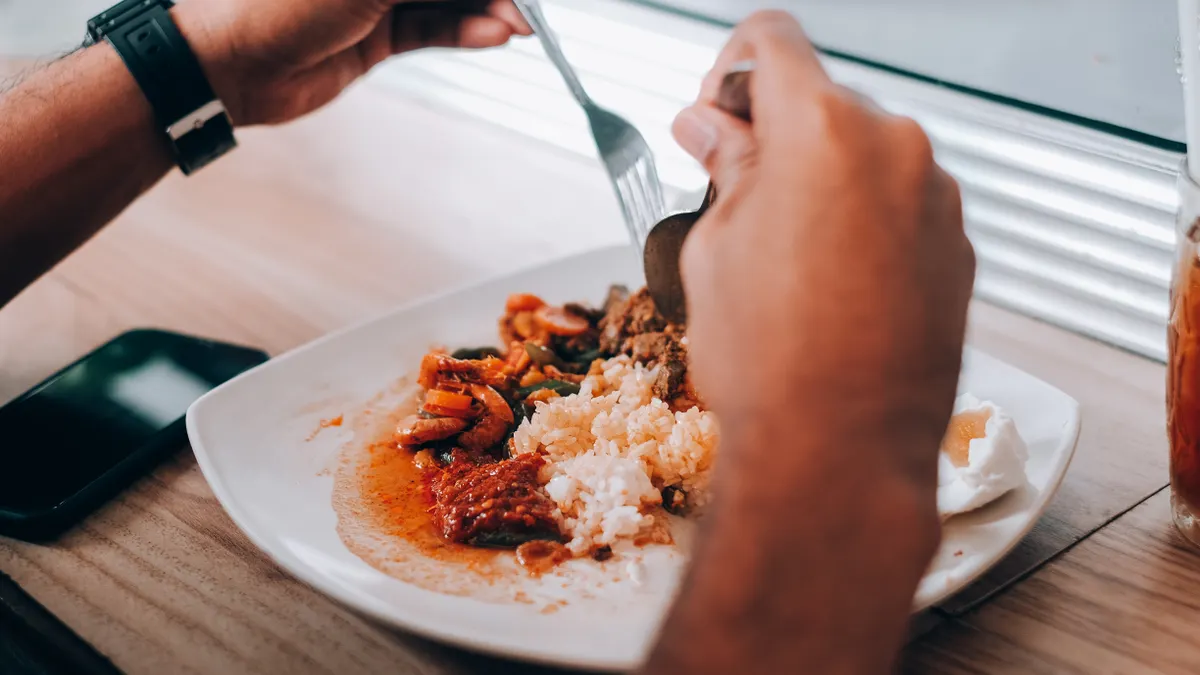
The meal pattern that usually works best is protein-forward meals spaced about 3 to 5 hours apart, with a snack only if the gap is longer or the next meal is far away.
That pattern wins because it fits the way satiety actually works. Protein slows gastric emptying, helps preserve muscle tissue, and tends to improve fullness more than a refined-carb snack. Fiber from vegetables, beans, fruit, oats, and intact grains adds volume without the crash. Fat helps satisfaction, but too much fat without enough protein can still leave a person hungry again soon.
A useful rule is to build each meal around three pieces:
- A clear protein source: eggs, Greek yogurt, cottage cheese, fish, chicken, tofu, tempeh, beans, or lean meat
- A high-fiber plant food: vegetables, fruit, lentils, beans, chia, flax, or whole grains
- A steadying carb or fat: oats, brown rice, potatoes, avocado, olive oil, nuts, or seeds
This pattern is better than constant snacking for most people because snacking often turns into grazing without much satiety. Tiny bites every hour can keep insulin and hunger feeling active without giving the body a real stopping point. On the other hand, very large meals are not automatically better. If lunch is so big that it causes a 3 p.m. slump, the pattern is too heavy.
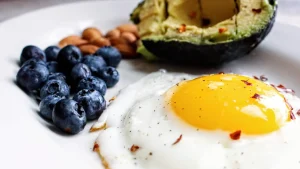
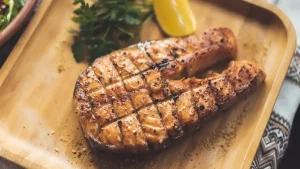
The best version of this plan is boring in the right way. Breakfast can be Greek yogurt with berries and oats. Lunch can be a turkey, tofu, or tuna bowl with vegetables and beans. Dinner can be salmon or chicken with roasted vegetables and potatoes. The actual foods matter less than the structure.
This pattern is not ideal for someone who cannot tolerate breakfast because of reflux, nausea, or medication timing. It is also not the right answer if someone has a history of disordered eating and rigid meal rules tend to trigger more anxiety than calm. In those cases, the pattern should be gentler and more individualized.
What should menopause meals look like if appetite is all over the place?
Menopause meals should be smaller but denser when appetite is low, and larger but slower when appetite is high.
If hunger is unreliable, the goal is not to wait for a perfect appetite. It is to make the first bite count. A small breakfast with 20 to 30 grams of protein is often more effective than a large sweet breakfast that burns off quickly. If the person cannot manage that amount, start smaller and work up over time. A boiled egg, yogurt cup, or protein-rich smoothie can be enough to interrupt the long gap.
When appetite surges later in the day, the answer is not to fight it with pure restraint. It is to make dinner less trigger-prone. A meal that includes protein, vegetables, and a measured portion of starch tends to settle hunger better than pasta, bread, or takeout alone. If snack cravings peak at 9 p.m., the fix may be an earlier dinner plus a planned evening option such as fruit and yogurt, not a ban on all evening food.
The exact structure matters less than the behavior it prevents, and if the pattern is hard to manage because of medical issues or eating-disorder history, a clinician should help shape it. A meal plan should stop three things:
- The 10 a.m. energy crash after coffee-only mornings
- The 4 p.m. panic eating that starts with one biscuit and ends in a full bag of snacks
- The oversized dinner that follows a long day of “being good”
This is where many generic diet plans fail. They talk about calories but ignore timing. They tell people to “listen to hunger” but ignore that menopause can make hunger erratic. If appetite is swinging, a more planned meal pattern is not restrictive; it is stabilizing.
One honest drawback: a denser meal can backfire if reflux, bloating, or constipation is already present. In that case, spreading food across smaller meals may be easier. The point is still the same: do not let hunger drive the whole day.
Should you eat fewer meals or more frequent meals in menopause?
Three meals usually works better than many small meals, but more frequent eating wins if long gaps cause overeating or if medication, nausea, or a busy schedule makes larger meals unrealistic.
This is the part of the debate where generic advice gets sloppy. Some people hear that frequent meals “keep metabolism active.” That claim is too broad to be useful. What matters is appetite control, not meal frequency as a magic trick.
For many women, fewer, more complete meals reduce decision fatigue and snacking. A breakfast-lunch-dinner pattern can simplify the day and make it easier to get enough protein at each sitting. It also creates natural stopping points. If you tend to keep eating once the pantry is open, a defined meal schedule may be a better fit.
More frequent meals can still make sense. If you wake up nauseated, work in shifts, have diabetes treatment that requires spacing food, or get shaky when meals are too far apart, smaller planned meals can prevent the blood sugar lows that drive overeating later. The key difference is that these should be planned meals, not random grazing.
A useful test is this: if your current pattern leaves you searching for food every 90 minutes, it is probably too light on protein and too light on structure. If your current pattern leaves you stuffed and sleepy after every meal, it is probably too large. The sweet spot is usually a meal that holds you comfortably for several hours without creating the urge to raid the kitchen.
For many readers, the simple answer is: start with three meals. Move to four smaller eating moments only if the first plan fails for a clear reason.
The honest side-by-side
The more structured meal pattern wins for appetite control; the more frequent pattern wins for people whose bodies or schedules make big meals impractical.
| Criteria | Three anchored meals | Four to six smaller eating moments | Winner for condition |
|---|---|---|---|
| Hunger control | Usually better because meals are more filling and less scattered | Can work, but grazing often blurs fullness signals | Three meals, if hunger is the main issue |
| Protein consistency | Easier to hit a meaningful amount at each meal | Harder unless each snack is protein-based | Three meals |
| Night eating risk | Lower when dinner is balanced and earlier | Higher if daytime eating never feels complete | Three meals |
| Blood sugar stability | Good when meals include fiber and protein | Good for people who crash between meals | Depends on symptoms |
| Decision fatigue | Lower; fewer eating decisions per day | Higher; more opportunities to snack on autopilot | Three meals |
| Fit for nausea or low morning appetite | Can be hard at breakfast | Often easier if the first meal is small | Smaller eating moments |
| Fit for busy workdays | Good if meal breaks are predictable | Better if meals must be portable and brief | Depends on schedule |
| Risk of mindless eating | Lower if meals are defined | Higher if every snack becomes an extra serving | Three meals |
| Flexibility for medication timing | Less flexible around certain medications | More flexible when food must be spaced out | Smaller eating moments |
| Sustainability | Often easier for long-term routine | Works if the person is organized and deliberate | Three meals for most people |
The table points to a practical conclusion: three structured meals are the better default for most menopause appetite problems. The frequent-meal pattern only wins when a specific barrier makes three meals fail.
The downside of the structured pattern is that it can feel too formal for people who hate routine or have unpredictable work hours. The downside of the frequent pattern is that it can quietly become snacking with better branding. If there is no clear start and stop, appetite control gets worse, not better.
What should be on the plate to keep hunger calmer?
Each menopause meal should center on protein, fiber, and enough energy to avoid a rebound craving two hours later.
Protein is the anchor. A meal with eggs, yogurt, fish, chicken, tofu, beans, or lean meat usually satisfies better than toast or cereal alone. Fiber is the second anchor. Vegetables, berries, apples, oats, lentils, and beans add volume and slow digestion. Fats help taste and staying power, but they do not replace protein.
A plate that works well often looks like this:
- Half the plate: vegetables or salad
- One quarter: protein
- One quarter: slow carb such as potatoes, rice, oats, or whole grains
- A small amount of fat for flavor, such as olive oil, nuts, avocado, or cheese
That plate pattern is not a strict rule. It is a way to avoid meals that are too carb-heavy to last or too light to stop hunger. A breakfast of pastry and coffee may feel convenient, but it often leaves a person chasing energy by midmorning. A breakfast with Greek yogurt, berries, chia, and oats is more likely to carry the morning through.
One overlooked point is texture. Crunchy vegetables, creamy yogurt, chewy grains, and warm protein-rich foods can make a meal feel more satisfying than bland calories of the same size. Satiety is not just chemistry; it is also the experience of eating a meal that feels finished.
A caution here: highly restrictive low-carb or low-fat diets can backfire if they strip meals of satisfaction. Some people feel better on fewer carbs, but if that pattern makes dinner feel empty, appetite often returns fast. The right mix is the one that keeps hunger quiet for several hours without causing fatigue or obsession.
When meal timing matters more than the foods themselves
Meal timing matters more when late-night eating, skipped breakfasts, or long work gaps are the main appetite problems.
If the body is fine until evening and then spirals, the timing problem is probably larger than the food choice problem. In that case, an earlier lunch, a substantial afternoon snack, or a more complete breakfast may prevent the nighttime binge better than cutting more calories. If the person is going until 2 p.m. on coffee and then overeating after work, the first fix is to stop the 8-hour food gap.
Timing also matters for sleep. A very large or very sugary late dinner can make some people feel hotter, more restless, or hungrier again before bed. A balanced evening meal, eaten a few hours before sleep, usually works better for appetite and rest than a grazing pattern that continues until lights-out.
That said, timing is not a cure-all. If there is significant emotional eating, untreated insomnia, alcohol use at night, or medication side effects, meal timing helps only partly. The food pattern can support appetite control, but it cannot solve every driver of overeating.
For readers who want a simple target, this is a reasonable one: do not let more than about 4 to 5 waking hours pass without either a meal or a planned protein-rich snack, unless your appetite and energy stay stable anyway. That is a guideline, not a law. If your body feels better on fewer eating moments, use fewer.
Exception scenarios that change the answer
The overall answer flips when a specific condition makes a standard meal pattern the wrong tool.
First, if nausea, reflux, or morning medication makes breakfast unpleasant, forcing a full breakfast can worsen appetite control. A smaller first meal, or a later first meal, is smarter than pushing through discomfort.
Second, if a person has diabetes treatment, reactive hypoglycemia, or another condition where long gaps cause shaky lows, smaller and more frequent meals may be the safer and more workable pattern. Appetite control should not come before medical stability.
Third, if there is a history of binge eating or disordered eating, rigid meal rules can trigger rebound eating or anxiety. A gentler structure with flexible portions may be better than a clock-based plan.
Fourth, if the workday includes a night shift, split shifts, or erratic travel, the “three meals at standard times” model may fail in practice. In that case, the goal is not standard clock time; it is consistent food access and reliable protein at the meals that do happen.
These are real exceptions, not excuses to abandon structure entirely. The pattern still matters. It just has to fit the person’s body and schedule.
How do I stop evening hunger without giving up dinner?
Evening hunger usually eases when lunch is stronger, the afternoon is not under-fueled, and dinner contains enough protein to finish the day well.
This is the question many people actually mean when they ask about menopause appetite control. The problem is rarely just “I’m hungry at night.” It is usually a chain: a light lunch, a long afternoon, a stress spike, then a dinner that does not feel complete.
The fix is practical:
- Eat a real lunch, not a token salad
- Add a 3 to 5 p.m. protein snack if dinner is late
- Include protein at dinner, not just pasta or bread
- Keep dessert intentional, not automatic
A planned snack might be yogurt, cheese and fruit, hummus and crackers, or nuts with fruit. The point is to arrive at dinner hungry enough to enjoy it, but not so hungry that the first serving disappears in 60 seconds.
If hunger still hits hard after dinner, check for under-eating earlier in the day before assuming “willpower” is the issue. That single adjustment solves a lot of evening overeating. It also explains why many diet plans fail after 4 p.m.; they treat the evening as the problem and ignore the day that caused it.
The verdict: which meal pattern should you choose?
Choose three anchored meals if your main problem is afternoon cravings, night eating, or weight creep from grazing. Choose smaller, more frequent meals if long gaps, nausea, medication timing, or blood sugar swings make big meals fail. Neither if your eating pattern is being driven by an untreated medical issue, active disordered eating, or severe insomnia that needs professional attention.
That is the cleanest call. For most women in menopause, three structured meals with one planned protein-based snack only when needed is the best default. It is simpler, steadier, and easier to maintain than constant snacking. It also gives the body real stopping points, which appetite control needs.
The exception is just as important: if this pattern makes you shaky, nauseated, or repeatedly overhungry, it is the wrong pattern for your day. Adjust the timing before you slash the calories.
For Menopause Meal Patterns and Appetite Control, the winning move is not eating less on paper. It is eating in a way that keeps hunger from turning into a daily emergency. If the meal pattern does that, it is the right one.
What the reader should do this week
Start with one 3-day experiment: eat a protein-centered breakfast, a real lunch, and a dinner that includes vegetables and a slow carb, then notice whether evening hunger drops.
That experiment tells you more than a month of vague resolve. Keep the same meal times for three days, and do not change five other things at once. If hunger improves, the pattern is helping. If it gets worse, look at the gap between meals, not just the food list.
A good first pass looks like this:
- Breakfast within 1 to 2 hours of waking, or later only if mornings are clearly better that way
- Lunch with protein and fiber
- One planned snack only if lunch to dinner is more than 5 hours
- Dinner that is satisfying enough to prevent a pantry raid later
If you want one final rule, make it this: do not trust a menopause appetite plan that depends on constant self-control. The best plan reduces the need for it.
Sources and further reading
The following organizations publish guidance relevant to this topic:
- National Institute on Aging, nutrition and aging resources: https://www.nia.nih.gov/health/healthy-eating
- National Institute of Diabetes and Digestive and Kidney Diseases, hunger and fullness education: https://www.niddk.nih.gov/health-information/weight-management/eating-habit-control-your-weight
- Academy of Nutrition and Dietetics, menopause and nutrition resources: https://www.eatright.org/health/wellness/menopause
- Harvard T.H. Chan School of Public Health, The Nutrition Source: Protein: https://nutritionsource.hsph.harvard.edu/what-should-you-eat/protein/
- Nutrients review on meal timing and protein distribution in older adults: https://www.mdpi.com/journal/nutrients
These sources are useful starting points for general nutrition guidance, but menopause symptoms, diabetes, reflux, and eating disorders deserve individual medical advice from a qualified clinician.
Drafted with AI; not yet reviewed by a person.