Why menopause meal timing can affect hunger and cravings
Why menopause meal timing can affect hunger and cravings: for many people, 3 meals and 1 planned snack spaced about 4 to 5 hours apart can make menopause…
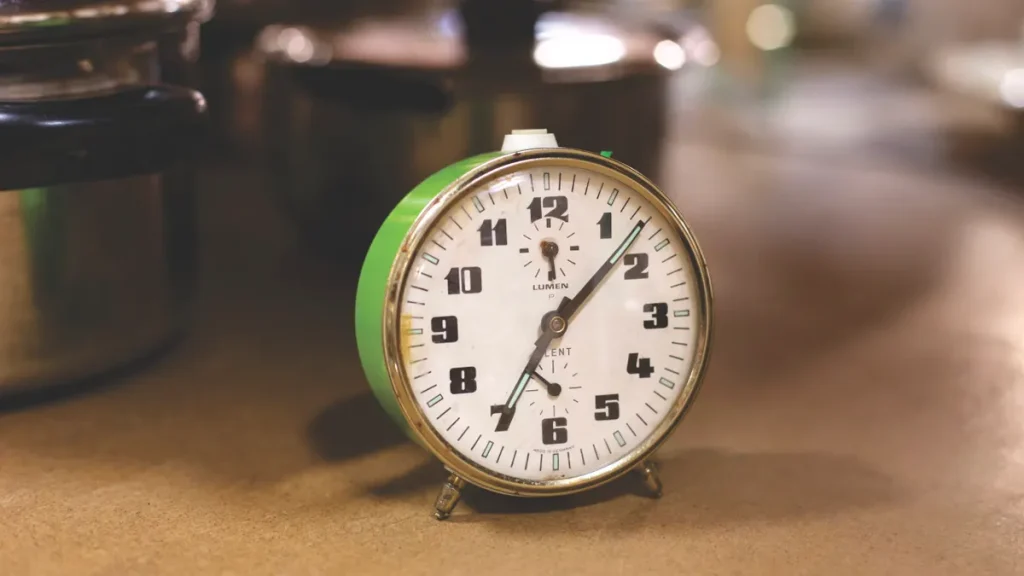
Green alarm clock on a table
Last updated: November 01, 2026
Quick answer: for many people, 3 meals and 1 planned snack spaced about 4 to 5 hours apart can make menopause hunger and cravings feel less intense.
In short: menopause meal timing can make hunger and cravings feel louder because long gaps, skipped meals, and late eating can nudge blood sugar and appetite signals in the wrong direction. Meal timing does not replace good food choices, but it can make the same breakfast, lunch, or snack feel much easier or much harder to control.
If menopause has turned “I can wait until dinner” into “I need food now,” the clock matters more than many people expect. Hunger is not just about what you eat. It is also about when you eat, how long you go between meals, and whether your body’s daily rhythm gets enough regular food to settle down.
Why meal timing changes hunger during menopause
Meal timing changes hunger during menopause because appetite hormones and blood sugar become less forgiving of long gaps. When meals are delayed too long, the body has to stretch between fuel stops. For many people, that means a stronger rise in hunger, sharper food thoughts, and a bigger pull toward quick snacks, especially in the late afternoon.
Menopause can make that pattern easier to trigger. Lower estrogen is linked with changes in appetite regulation, and sleep disruption can make hunger signals feel louder the next day. The result is not just “being hungrier.” It is often a more urgent, less predictable kind of hunger that shows up suddenly, then pushes cravings for fast carbohydrate, salty foods, or anything easy to eat in 5 minutes.
Blood sugar matters here. A meal pattern with 4 to 6 hours between meals may feel fine for one person and miserable for another, but very long stretches often set up a drop-and-rebound pattern: energy dips, irritability rises, and cravings arrive before the next meal is ready. That is why the same diet can feel manageable at 10 a.m. and impossible at 4 p.m.
Circadian rhythm adds another layer. The body expects food earlier in the day and tends to handle glucose better then than late at night. When most calories land after 8 p.m., some people notice more evening hunger and less satisfaction from the same foods. This is one reason menopause meal timing deserves its own conversation apart from what foods to eat.
For a broader look at the pattern, the hub on menopause meal patterns and appetite control fits here.
What blood sugar has to do with cravings

Blood sugar has to do with cravings because your brain reads a drop in available fuel as a cue to eat fast, not as a calm invitation to “make a better choice.” That is why a 3 p.m. crash can feel like a craving problem when it is really a timing problem.
The mechanism is simple enough to notice in real life. If breakfast is tiny, lunch is delayed, or there is a long stretch between meals, blood sugar can dip enough to trigger fatigue, shakiness, or a short fuse. By the time dinner starts, hunger may be so strong that food choices get less deliberate. The person does not need a lecture about discipline. They need a shorter gap between meals or a planned snack.
A useful way to think about this is the “fuel window.” Many people do better when they do not let the gap between eating stretch far past 4 to 5 hours during the day. That is not a hard rule for everyone, but it is a practical starting point if cravings hit in a regular pattern. A 9 a.m. breakfast, 1 p.m. lunch, and 4:30 p.m. snack can prevent the late-day slide better than a 9 a.m. breakfast and a 7 p.m. dinner with nothing in between.
What this does not do: it does not cure all cravings. If stress is high, sleep is poor, or dinner is low in protein, hunger can still show up. Meal timing is a lever, not a magic fix. It can be most useful when the problem is predictable, like “I always raid the pantry at 5 p.m.” or “I eat lunch late and then snack hard at night.” If cravings are severe or persistent, consult a clinician or registered dietitian. See the NIH overview on hunger and appetite regulation and the CDC guidance on healthy eating patterns. NIH | CDC
A simple meal-timing routine that can calm hunger
A simple meal-timing routine can calm hunger by giving the body a regular pattern it can anticipate. Start with 3 meals and 1 planned snack, then adjust the timing before changing the foods. The goal is to reduce the size of the hunger wave, not to eliminate hunger altogether.
Use this as a practical 1-day structure:
- Eat within 1 to 2 hours of waking. A morning meal gives your body an early signal that food is available, which can reduce the “catch-up” hunger that shows up later.
- Set lunch 4 to 5 hours later. A lunch that lands around midday or early afternoon helps prevent the midafternoon drop that often leads to grazing.
- Add a snack 2 to 4 hours after lunch if hunger is building. Choose a planned snack instead of waiting until you are starving; the result is usually less urgency at dinner and fewer impulse choices.
- Keep dinner earlier when possible. Finishing dinner 2 to 3 hours before bed can help some people feel less heavy at night and less snacky while winding down.
- Watch the gap before bed. If you are still genuinely hungry 1 to 2 hours after dinner, use a small, planned snack instead of a random pantry search.
That routine works best when the timing is consistent for at least several days in a row. One scattered day does not matter much. A pattern of late breakfast, skipped lunch, and huge dinner usually does. The body likes repetition. Hunger often calms down when it knows the next meal is not far away.
If a person is used to eating only twice a day, this shift can feel annoying for a few days. That is the trade-off. The upside is fewer emergency cravings and less all-or-nothing eating. This is not the right approach for someone who already feels physically better on two larger meals and has no hunger crashes between them. The point is to match timing to symptoms, not force a rigid schedule.
Why skipping meals can backfire in menopause

Skipping meals can backfire in menopause because the body often overreacts to the next eating opportunity. What looks like “saving calories” at 11 a.m. can become stronger hunger, faster eating, and more cravings by 5 p.m.
This is especially common with breakfast. Some people feel fine skipping it at first, then notice that the price shows up later: poor focus, a bigger appetite at lunch, and a strong pull toward sweet or salty foods in the afternoon. The issue is not moral failure. It is that a skipped meal can turn the rest of the day into recovery mode.
The same thing happens with lunch. A person can get through a busy morning on coffee and adrenaline, then hit a wall in late afternoon. At that point, the body is no longer asking politely. It wants quick energy. That is when crackers, candy, and repeated grazing become more likely.
Skipping meals is not always the best choice, especially if it reliably leads to rebound hunger or bingeing later. If someone truly is not hungry and is functioning well, there may be no need to force food on a rigid schedule, but if the pattern is “I skip, then I binge later,” the skip is part of the problem. That is a meal timing problem, not a willpower problem. See NIDDK guidance on eating patterns and the Academy of Nutrition and Dietetics for when to individualize meal structure. NIDDK | Academy of Nutrition and Dietetics
The easiest fix is often to treat the skipped meal like a broken link in the chain. If a meal is routinely missed, consult a clinician or registered dietitian about whether a small, repeatable option belongs there: yogurt, eggs, soup, a sandwich, or another familiar food.
How circadian rhythm changes when hunger shows up
Circadian rhythm changes when hunger shows up because the body handles food differently across the day. Appetite, digestion, and glucose control all follow a daily rhythm, and menopause can make that rhythm feel less stable.
This is why eating patterns that feel neutral at noon can feel troublesome at 9 p.m. Late-night eating does not only add calories. It often arrives when the body is less ready to handle glucose, and the result can be more lingering hunger, more cravings, and less satisfaction from the same meal. A bowl of cereal at 10 p.m. can feel like a snack and still leave a person wanting more.
Morning and early afternoon are often better windows for larger meals than late evening, although the best timing still depends on the person and their sleep, work schedule, and symptoms. That does not mean a huge breakfast is required. It means the body usually tolerates regular fuel earlier in the day more smoothly than it does late at night. For many people, moving calories earlier by even 2 or 3 hours improves how steady hunger feels.
This is also why late dinners can create a loop. A late, heavy meal may lead to poor sleep, and poor sleep can make the next day’s hunger louder. That next day then starts with more cravings, more caffeine, and another delayed meal. Once that pattern starts, the hunger does not feel random anymore. It feels relentless.
The fix is rarely dramatic. It is usually a small shift: breakfast a bit earlier, lunch less delayed, dinner not too close to bedtime, and fewer calories pushed into the last hour of the day.
Snack timing: the small adjustment that often matters most
Snack timing matters because a planned snack can stop hunger before it turns into cravings. A good snack is not a rescue mission after you are already starving; it is a bridge between meals.
The best snack window is often 2 to 4 hours after lunch, or 1 to 2 hours before dinner if dinner tends to run late. That timing helps prevent the “I can’t wait another minute” feeling that often leads to oversized portions or repeated trips to the kitchen. A snack at the right time can also make dinner calmer and more deliberate.
The common mistake is waiting until hunger is loud. By then, almost any snack looks inadequate, and people tend to eat faster and more than they meant to. Another mistake is using snack time to test discipline. If the gap is too long, the snack will not be optional in practice. It will just arrive after the body has already gone into emergency mode.
A better approach is to decide on a snack window before hunger spikes. That could be midafternoon on workdays, after a walk, or before an evening commute. The exact food is outside this page’s job. The timing is the point. If the snack is predictable, hunger is less likely to become a crisis.
One useful standard: if you are routinely ravenous by dinner, the snack is probably too late, not too small. Move it earlier by 30 to 60 minutes and see whether the evening changes. For more on meal spacing, see the Harvard T.H. Chan School of Public Health on healthy plate patterns and the NHS advice on balanced eating. Harvard T.H. Chan School of Public Health | NHS
When meal timing is the wrong fix
Meal timing is the wrong fix when the real problem is pain, medication side effects, disordered eating, or another medical issue that needs proper care. It also is not the best answer if cravings are driven mainly by sleep loss, severe stress, or blood sugar problems that need professional evaluation.
A timing change should feel like a sensible experiment, not a punishment. If you try more regular meals for 1 to 2 weeks and hunger gets worse, something else may be going on. The same is true if cravings come with fainting, unexplained weight change, vomiting, or symptoms that do not fit a simple appetite pattern. In those cases, talk with a clinician or registered dietitian.
This is also not the right page for someone looking for a full meal plan, a weight-loss formula, or a menopause plate template. Those are different jobs. Here, the point is to understand why the clock changes hunger so that the person can stop blaming themselves for a pattern that has a real rhythm behind it.
A practical rule: if hunger is predictable, timing can help. If hunger is chaotic, extreme, or medically concerning, timing alone is not enough.
Comparison table: meal timing options
| Option | Typical timing | What it may help with | Trade-off |
|---|---|---|---|
| 3 meals + 1 planned snack | Meal every 4 to 5 hours | Steadier hunger, fewer afternoon cravings | Requires planning |
| 2 larger meals | Longer gaps, fewer eating moments | May suit people who feel fine without frequent meals | Can backfire if gaps trigger rebound hunger |
| Early dinner pattern | Dinner 2 to 3 hours before bed | Less late-night snacking, better sleep for some people | Can be hard with work or family schedules |
| Late dinner pattern | Most calories after 8 p.m. | Convenient for some schedules | May worsen evening hunger and cravings for some people |
Key Takeaways
- Meal timing can make menopause hunger feel calmer or more urgent, even when the food itself stays the same.
- Long gaps between meals often set off stronger cravings later in the day.
- Blood sugar dips, late eating, and circadian rhythm all push appetite in the same direction.
- A planned snack placed before hunger gets sharp is usually more useful than a rescue snack after the fact.
- Skipping meals is most likely to backfire when it leads to a bigger evening appetite or repeated pantry visits.
- If appetite changes feel extreme or unusual, timing is not a substitute for medical advice.
Does eating late cause cravings?
Eating late can contribute to cravings for some people. Late meals often arrive when the body is less ready to handle food, and they can crowd calories into the part of the day when hunger is already less predictable. If late eating also disrupts sleep, the next day’s cravings may feel even stronger.
Is skipping breakfast bad during menopause?
Skipping breakfast is a problem if it leads to a bigger hunger rebound later. Some people do fine with a later first meal, but many notice a stronger afternoon crash, more snacking, or a hard-to-control dinner appetite when they skip breakfast. The pattern matters more than the label.
How many hours should I go between meals?
Most people do better with meals spaced about 4 to 5 hours apart during the day. That is not a hard rule, and some need a snack sooner, especially if cravings hit between lunch and dinner. The best gap is the one that prevents emergency hunger without forcing you to graze all day.
Drafted with AI; not yet reviewed by a person.